
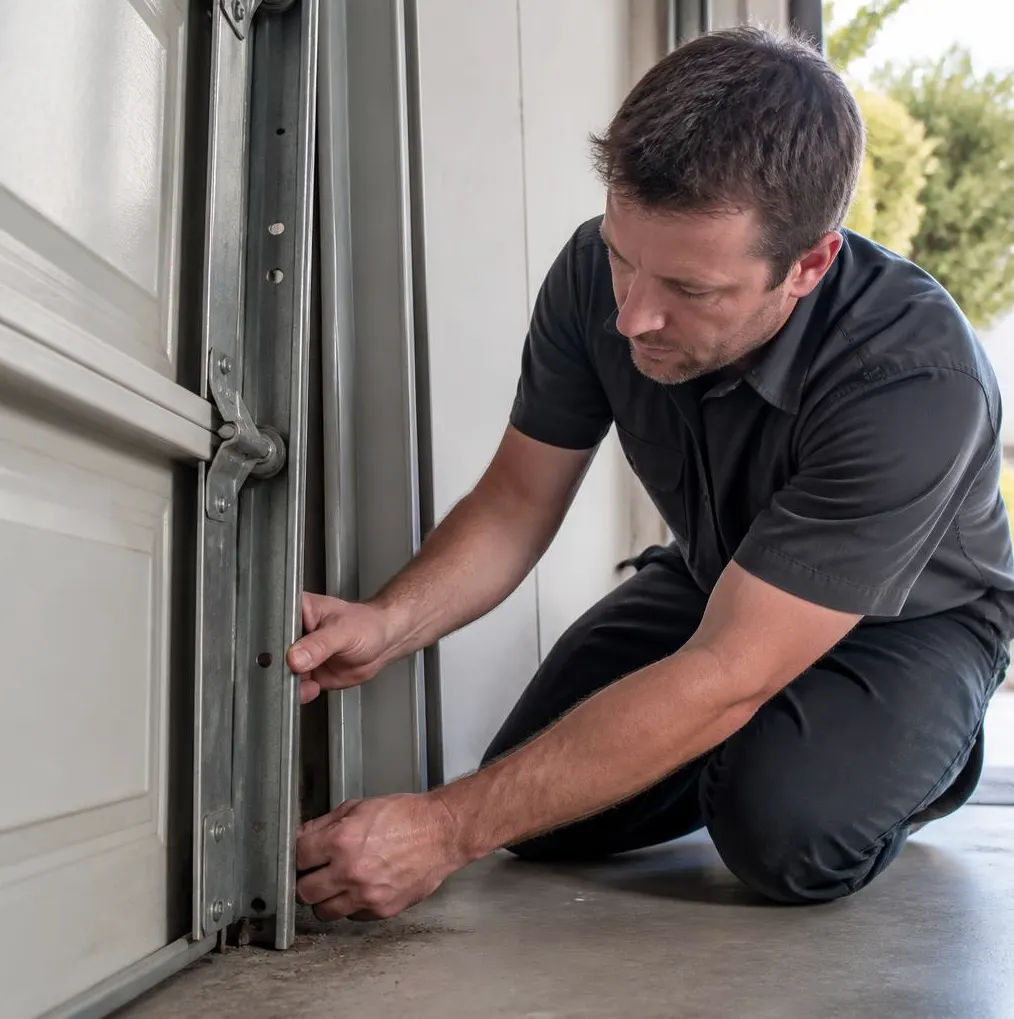
What a Technician Sees on This Kind of Call
The call usually comes in a few months after the drywall goes up. Someone finished out the garage as a home gym or workshop over the summer, and now the door is binding, the opener is straining, or it just stopped working right. Sometimes the homeowner says the door is "basically just for looks now" and wants to know if they can skip maintenance on it entirely. Other times the argument is the opposite: one spouse wants the door gone, the other wants to keep it operational for storage, resale, or letting the dog out. Either way, the door and the room it's attached to usually haven't been thought through together, and that's where the trouble starts.
The Door Doesn't Know the Room Changed Jobs
A garage door is a big, spring-balanced, moving piece of hardware. It doesn't care that the space behind it is now a squat rack and a mirror instead of a car and a lawnmower. It still needs the same clearances, the same balance, and the same seasonal care — arguably more, because a finished room changes the environment around the door in ways people don't expect.
The Weight Problem Nobody Thinks About
If you add an insulated panel kit to the existing door, swap the door for a heavier insulated model, or mount anything to the inside of the door (shelving, a punching bag, blackout panels), you've changed how much the springs need to lift. Torsion springs are tensioned for a specific door weight. Add weight without adjusting the springs and the door gets hard to lift by hand, the opener starts working overtime, and you shorten the life of both the springs and the motor. This is one of those jobs that looks simple and isn't — spring tension is stored energy, and it's not a DIY adjustment.
Condensation Once the Garage Is Sealed Up
An unfinished garage breathes. A finished one, insulated and drywalled for a gym or workshop, traps humidity — especially through Lenawee County's humid summers and storm season. That moisture has to go somewhere, and a cold, uninsulated garage door is often where it lands first, as condensation beading on the inside panels. Over time that moisture works into the hardware: hinges, rollers, and especially the bottom bracket and track, where it mixes with winter road salt that gets tracked in on vehicles or boots and accelerates rust. A door that's rusting from the inside out is a slower, less obvious problem than a noisy one, but it's more expensive to fix.
What Winter Does to a Door That's "Just for Looks"
Deep cold changes how a garage door behaves whether you use it daily or not. Weatherstripping gets brittle and cracks in sub-freezing temperatures, which lets cold air, snowmelt, and dust into a space you're now paying to heat and use as living space. If the door sits mostly closed all winter because the room behind it is finished, people often stop checking it — and that's exactly when a bottom seal fails quietly, ice builds up under the door, or a spring that's been sitting under uneven tension finally gives out on the one day you need to move something big in or out. Spring thaw brings its own issue: mud and grit worked into the track over winter doesn't flush itself out, and a door that isn't exercised regularly is more likely to bind or jump track when it finally gets used.
The Real Trade-Offs: Keep It Working vs. Treat It Like a Wall
This is usually where the actual disagreement lives, so here's the honest version of both sides:
- Keep the door fully operational. Costs more upfront to insulate properly and keep the springs and opener matched to the door's weight, but you keep flexibility — moving equipment in and out, resale value, and a backup exit for large items. Requires actual maintenance: lubrication, seal checks, and periodic spring inspection, especially before winter.
- Treat the door as a permanent wall. You can disconnect the opener and leave the door down, which reduces wear, but the door and its hardware are still there and still exposed to temperature swings and humidity unless you also insulate and air-seal it properly. Skipping maintenance because "it never moves" is how people end up with a rusted, seized door that's expensive to replace later, right when they decide they want it functional again.
- A hybrid approach — insulate the door itself, keep it on a working opener, but set it up with a wall-mounted gym mirror or storage system that doesn't add weight to the door — is often the compromise that avoids both problems. It keeps the option open without quietly overloading the springs.
There's no universally right answer here; it depends on whether the space needs to go back to "garage" someday, how much insulation you're adding, and how much you actually use the door now.
When to Call Adrian Garage Door
If you're insulating or converting a garage and the door has started binding, feels heavy to lift by hand, or the opener strains more than it used to, that's a spring balance issue — have it checked before a spring fails under tension. We offer Spring Replacement and full Garage Door Maintenance for homeowners across Adrian, Tecumseh, Blissfield, Clinton, Hudson, Morenci, Dundee, and Onsted, and we'll tell you honestly whether your current door and opener can handle the conversion or whether it's time to talk about an upgrade.
If you're planning a garage conversion in the Adrian, MI area, call Adrian Garage Door before the drywall goes up — a quick inspection now can save a spring, an opener, or an argument later.